Where the Bosphorus meets the sky in a shimmer of silver and blue, Dolmabahce Palace rises like a final verse in the poem of an empire. With crystal chandeliers grander than any ballroom waltz, and staircases that seem to float in air, this palace tells the story not of conquest — but of elegance, longing, and change.
Built in the twilight of the Ottoman era, Dolmabahce blends Ottoman grandeur with European charm, echoing both Versailles and Istanbul in every gilded detail. It’s where sultans walked in silk slippers… and where the founder of modern Turkey, Mustafa Kemal Ataturk, drew his final breath.
As of May 2026, the entrance fee for Dolmabahce Palace is 2000 Turkish Liras, including both the Selamlik and Harem sections. Visiting hours currently run from 09:00 in the morning until 17:30 in the evening, while the palace remains closed on Mondays. Since Dolmabahce has become one of Istanbul’s busiest museums in recent years, many travelers now prefer arranging their admission in advance through skip-the-line ticket platforms rather than waiting at the ticket office.
Throughout the rest of this guide, you’ll find clear and practical advice to help organize your visit. Having worked as a professional tour guide in Istanbul for more than two decades, I’ve gathered here the most common questions from my guests — together with straightforward answers that will help you explore Dolmabahce Palace more comfortably and make the most of your time inside this remarkable waterfront residence.
History of the Dolmabahce Palace
The history of Dolmabahce Palace goes back 150 years. However, to properly tell the history of the palace, we need to rewind a little and go to the 15th century. The first palaces built after 1453, the year the Ottomans conquered Constantinople, were very different from Dolmabahce.
1. First Ottoman Palaces in Istanbul
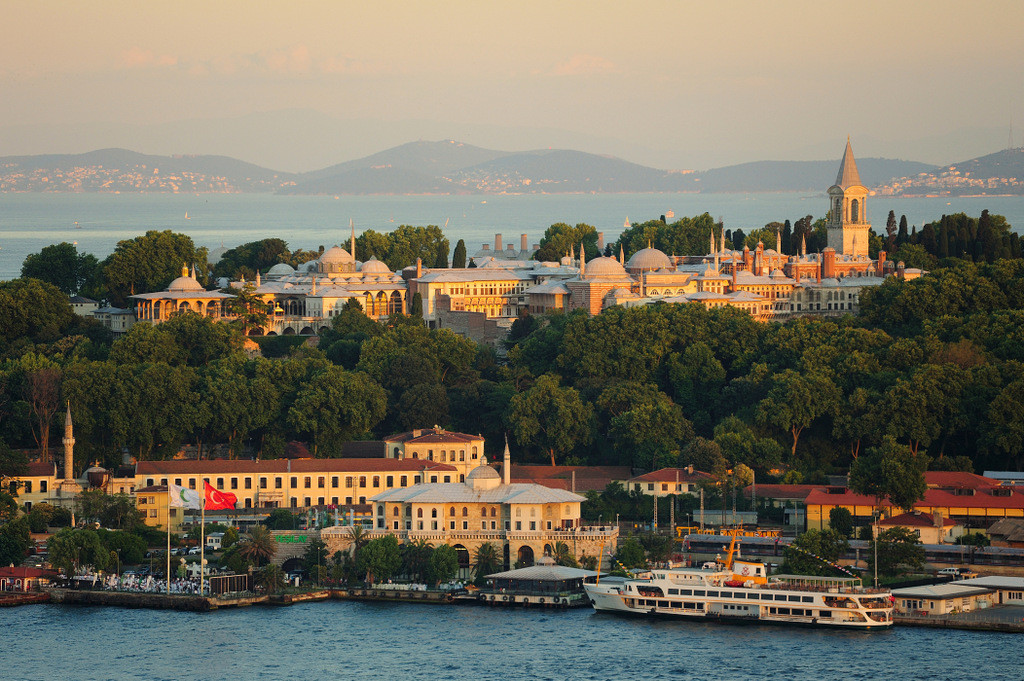
The first Ottoman palaces in Istanbul were built in the 15th century. Sultan Mehmed II, the first Ottoman sultan who set foot in Istanbul, first built a palace in Beyazit (near the Grand Bazaar). He lived in this palace during the construction of Topkapi Palace in Sultanahmet.
The Topkapi Palace was designed by the Sultan as a meeting center where governmental affairs could be discussed and a school for future bureaucrats. Topkapi Palace, which consists of four large courtyards, reflected the traces of the Central Asian tradition of the Turks.
During the period when the Ottoman Empire was at its peak, the Ottoman sultans, who were mentioned most in history, lived in this palace. At the request of Hurrem Sultan, the wife of Suleiman the Magnificent, the Harem in the Old Palace in Beyazit was moved to the Topkapi Palace.
When the sultan’s mother, sisters and wives moved to the Topkapi Palace, the classical palace expanded to the shores of the Marmara Sea with new buildings. During this period, life was limited to Historic Peninsula of Istanbul.
2. Bosphorus Coast Becomes Popular
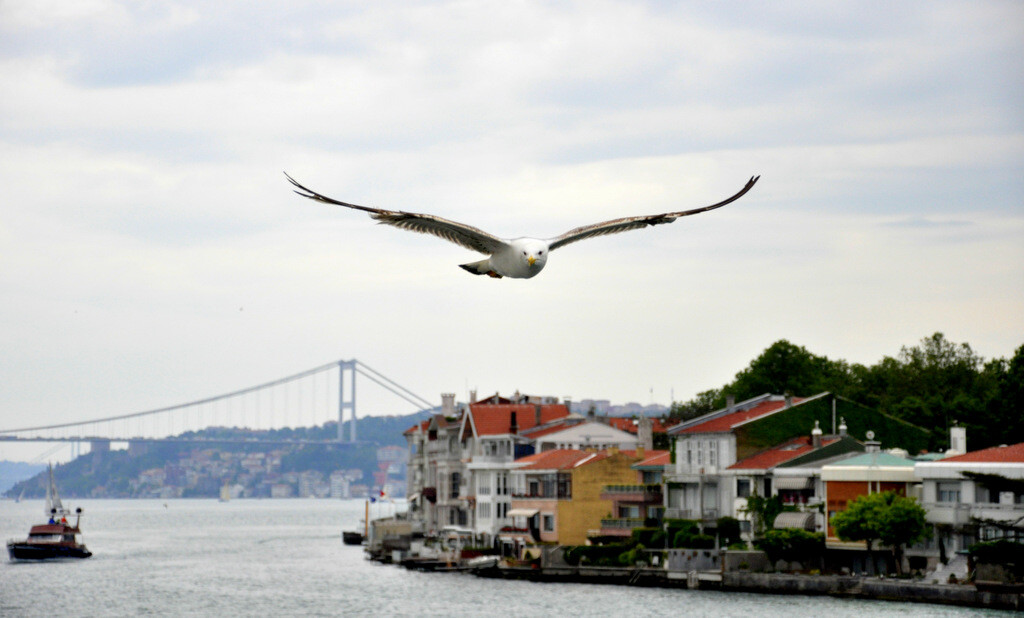
By the 18th century, the Ottoman sultans began to stay in the coastal district of Besiktas, so the Bosphorus shores became more popular. Life, which was limited to the Historic Peninsula in the early period, began to spread towards the Bosphorus during this period. Especially districts like Beyoglu and Besiktas were developing rapidly.
The first Ottoman ruler, who never lived in Topkapi Palace after he became Sultan, was Mahmud II. The janissary rebellion, which resulted in the death of his predecessor Selim III, left unpleasant memories in the mind of the young sultan.
Mahmud II paved the way for reform and westernization in the Ottoman Empire. The Janissary army (Ottoman elite troops), which had lost its function, was removed and replaced by an army in the western order. Clothes and lifestyle were adapted to the modern world.
3. Who Built the Dolmabahce Palace?
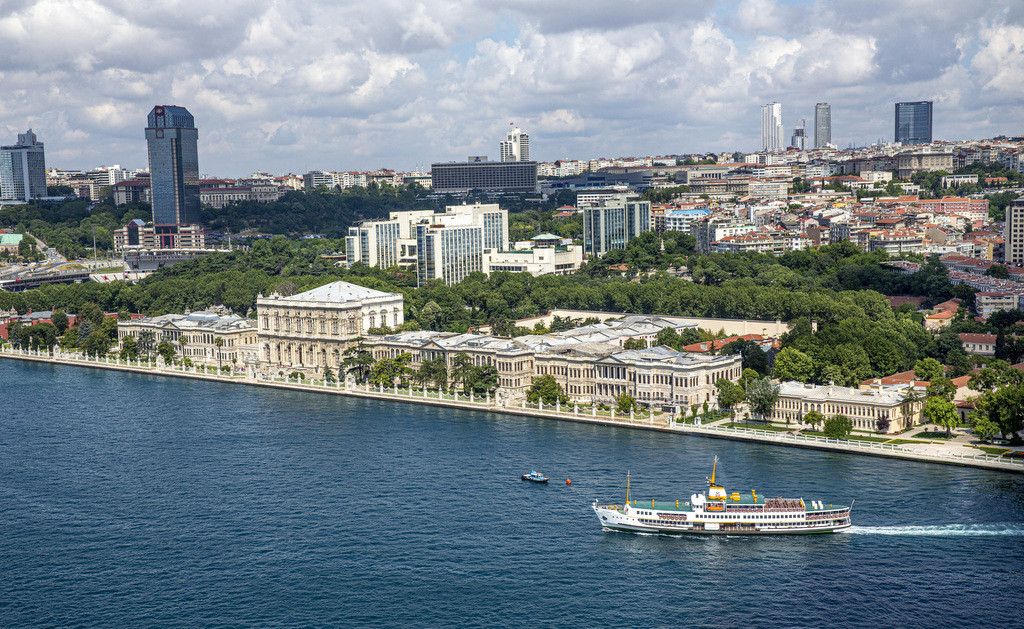
The son of Sultan Mahmud II, Sultan Abdulmecid, received a modern education. Abdulmecid, who ascended the throne at a time when the Ottoman Empire was in a great change, was closely following the developments in the world.
Financial developments in the world have found their response in Istanbul and banks and insurance companies were opened one after the other. Investments made by Western businessmen in Istanbul were supported by Ottoman citizens, especially non-Muslims.
In the last century of the Ottoman Empire, the prominent figures of the capital sent their children to Paris for education. During this period of rapid westernization of the lifestyle, French became the second language.
Ottoman citizens studying in Paris carried the western architectural style to Istanbul. The Balyan family, who had been a palace architect for a period in the 19th century, was brought up in the same way.
In the 1850s, Sultan Abdulmecid decided to build Dolmabahce Palace. Nikogos Balyan and Garabet Balyan built a structure using Neo-Classical and Baroque architectural styles. They also crowned the architecture of the building with Ottoman decoration elements.
4. Interior Decoration of the Palace

The most popular objects of the period were used for the interior decoration of the palace. In order to crown these mostly imported objects with Ottoman style, workshops producing royal Turkish carpets were established in Hereke.
The furniture used inside the Dolmabahce Palace was imported from France. The magnificent crystal chandeliers were brought from England. Talented masters and painters from Italy also decorated the walls of the palace. The infrastructure of the palace was equipped with the latest techniques of the 19th century.
In the photo above, showing the richly decorated interiors of Dolmabahce Palace, one of the most remarkable details is the elegant Hereke carpet visible beneath the grand chandelier and Baroque-style ceiling decorations. Produced for the Ottoman court during the 19th century, Hereke carpets represent one of the most refined traditions of Turkish carpet weaving. If you would like to explore the history of Turkish carpets and rugs in greater depth, you can also visit my specialist website on the subject, prepared by combining more than 20 years of field experience with academic sources: Istanbul Turkish Rugs.
Dolmabahce Palace Entry Fee (2026)
Dolmabahce Palace entrance fee is 2000 Turkish Liras in 2026. This ticket includes access to the main palace (Selamlık), the Harem section, and the Painting Museum. Please note that Museum Pass Istanbul is not valid at Dolmabahce Palace. This information was last updated in May 2026.
Dolmabahce Palace Ticket & Tour Options (2026)
Visitors who prefer a smoother experience often choose to arrange their Dolmabahce Palace tickets online in advance. Below are two practical options: a skip-the-line ticket with audio guide or a Bosphorus sunset cruise passing by the palace from the water.
Both options include mobile confirmation through GetYourGuide.
Dolmabahce Palace Opening Hours (2026)
In 2026, Dolmabahce Palace is open to visitors daily from 09:00 AM to 5:30 PM, except on Mondays, when it is closed. This information was last updated in May 2026.
Istanbul museum hours are subject to change. Before going to the museum, I recommend visiting the official website of the palace and review the latest situation.
How to Get to Dolmabahce Palace?
Dolmabahce Palace is located along the shores of the Bosphorus between the neighborhoods of Kabataş and Beşiktaş. Unlike many of Istanbul’s historical monuments concentrated around Sultanahmet, the palace stands directly beside the water, with its long ceremonial façade facing the Bosphorus. Because of its central location and easy access to tram, ferry, and funicular connections, reaching Dolmabahce Palace is usually quite straightforward for visitors.
If you are coming from Taksim Square, the easiest option is to take the F1 Funicular down to Kabataş Station, which takes only a few minutes. From Kabataş, the palace is less than a 10-minute walk along the waterfront. Visitors staying in Sultanahmet can use the Tram T1 line toward Kabataş and walk from the final stop. Ferries arriving from the Asian side also stop at Kabataş Pier, making the palace easily accessible from Kadikoy and Uskudar as well.
In my experience as a licensed Istanbul tour guide, the metro, tram, and ferry system are usually the most practical transportation options for visitors exploring the city. Istanbul traffic can sometimes be unpredictable, especially around popular districts and waterfront areas. If you would like a better understanding of how public transportation works in Istanbul, you can also check my detailed guide to the Istanbul metro and tram maps .
If you are visiting Dolmabahce Palace, these other landmarks are also worth exploring across Istanbul’s historic districts:
- Hagia Sophia – Historic monument shaped by both Byzantine and Ottoman history
- Topkapi Palace – Former imperial residence of the Ottoman sultans
- Blue Mosque – Imperial Ottoman mosque facing Hagia Sophia
- Galata Tower – Medieval tower overlooking Istanbul’s historic skyline
- Basilica Cistern – Underground Byzantine water reservoir beneath the Old City
Conclusion
Dolmabahce Palace isn’t just a royal residence — it’s where the Ottoman Empire embraced the beauty of Europe while holding on to its imperial soul. With its crystal chandeliers, sweeping staircases, and views over the Bosphorus, it tells a story of power, elegance, and transition.
After your visit, take a few steps toward Beşiktaş Pier, where ferries glide between continents. Or walk along the vibrant coastal promenade toward Ortaköy, a charming neighborhood filled with cafés, street art, and a waterfront mosque that sparkles at sunset.
If you’re looking to explore more palatial beauty, head inland to Yıldız Park, once part of the palace’s extended grounds — perfect for a quiet stroll under ancient trees.
And as the day winds down, don’t miss grabbing a cup of Turkish tea at a seaside café, watching the ferries cross the strait. Because in Istanbul, history doesn’t just live in museums — it sails, whispers, and lingers in the sea breeze.
Hi,
Do you know if ICOM card is valid to visit Dolmabahce Palace and Beylerbeyi Palace?
I wrote about this to the info service of the official website but I had no answer. Thank you for your very updated website.
Dear David Hibernie, Unfortunately, I have no information about this. Dolmabahce Palace and Beylerbeyi Palace are operated by the National Palaces Administration and you can access their official website at this address.
Is there a special rate or discount for museum pass holders?
Or do we have to pay full price?
Thank you for your return.
Hello Satki, unfortunately there is no discount for museum pass holders at Dolmabahce Palace.