Rising above the historic streets of Beyoğlu, Galata Tower is one of Istanbul’s most recognizable landmarks. Originally built by the Genoese in the medieval period, the tower later served different purposes during the Ottoman era and eventually became one of the city’s most popular panoramic viewpoints.
Today, visitors come here not only for the spectacular views over the Bosphorus and the Historic Peninsula, but also for the atmosphere of the surrounding Galata neighborhood — filled with narrow streets, historic apartments, cafés, and traces of old cosmopolitan Istanbul.
As a licensed Istanbul tour guide who has spent more than 20 years exploring these streets with travelers, I created this guide to explain everything you need to know before visiting Galata Tower in 2026, including ticket prices, opening hours, Museum Pass details, and practical visitor tips.
The History of the Galata Tower
To understand the story of Galata Tower, it helps to take a short step back and look at the bigger picture. Long before the tower shaped Istanbul’s skyline, the city itself had already begun its transformation into one of the most important capitals in world history.
What we now call Istanbul was once Constantinople, the eastern capital of the Roman Empire — a decision that would permanently change the balance of power, trade, and culture in the Mediterranean world.
1. Foundation of Constantinople
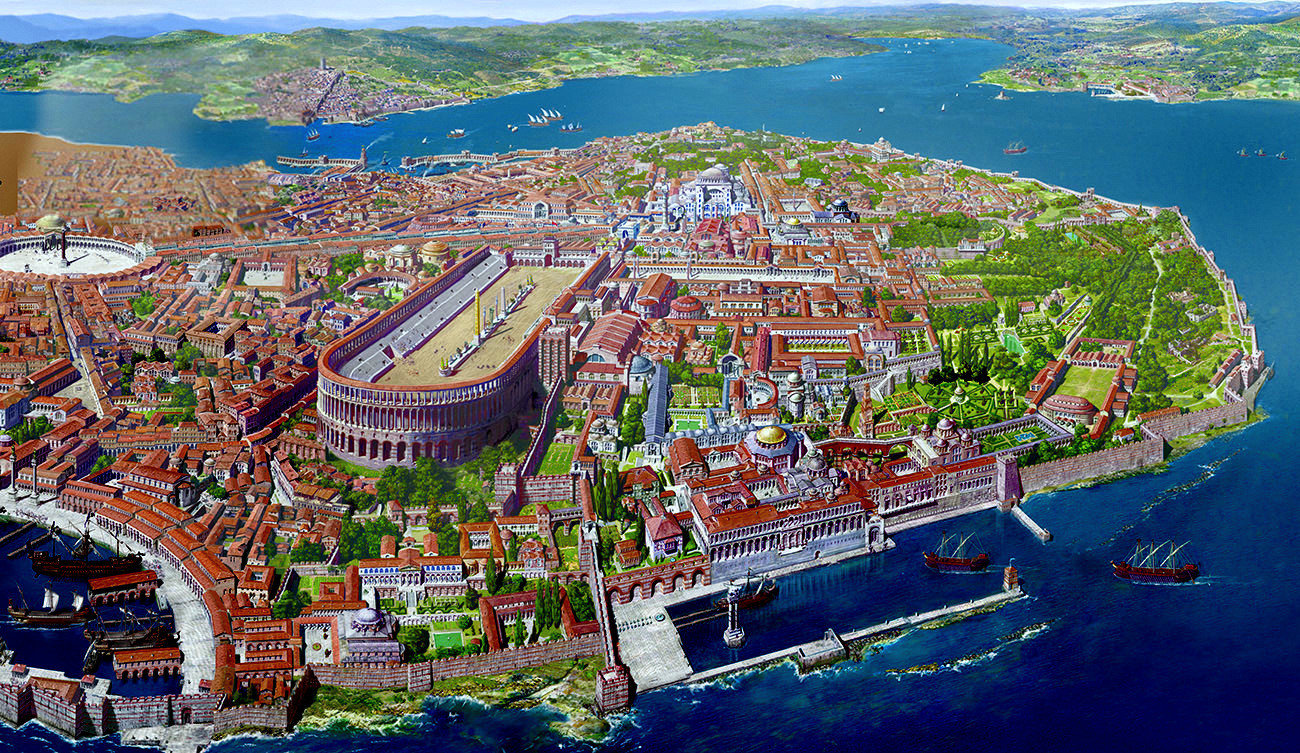
When Constantine the Great announced his decision to move the capital of the Roman Empire to a relatively small city called Byzantium, it shocked many of his contemporaries. Rome had ruled the empire for centuries, and abandoning it seemed unthinkable.
Yet Constantine’s choice was far from impulsive. It was the result of clear strategic and economic reasoning.
By the early 4th century, Rome had lost much of its military and geopolitical advantage. The empire’s two greatest threats — Germanic tribes in the west and the Persians in the east — required a capital that could respond quickly to both fronts. Byzantium sat almost perfectly between them.
Beyond strategy, the city offered something even more valuable: control of trade. Positioned at the crossroads of routes linking Asia and Europe, Byzantium had the potential to become the main commercial hub of the Eastern Mediterranean. Constantine recognized this long before it became obvious to others.
This location would later fuel not only the Byzantine Empire, but also the Ottoman Empire, enriching them for centuries through commerce, taxation, and maritime dominance.
In 330 AD, Constantine officially moved the capital from Rome to Byzantium. At first, the city was called New Rome, emphasizing continuity rather than rupture. Over time, however, it became known as Constantinople, honoring the emperor who reshaped its destiny.
From that moment on, Roman emperors ruled primarily from the east. With Constantinople as its center, the empire shifted its focus to a region that promised wealth, stability, and global influence — setting the stage for the city Galata Tower would later rise beside.
2. Italian Trade Colonies
Within just a few centuries, Constantinople had evolved into one of the most important trading hubs in the world. Silk, spices, and luxury goods arriving from Asia were gathered in the city’s harbors, then redistributed across Europe. At the heart of this system stood merchants from Venice and Genoa.
The roots of these Italian trading communities go back to the Byzantine era. At that time, Constantinople was largely confined to what we now call the Historical Peninsula. Across the Golden Horn, on the opposite shore, a new commercial zone began to take shape: Galata.
Here, Venetian and Genoese merchants established fortified trading colonies, complete with warehouses, docks, and protective walls. While relations between the Catholic Italian merchants and Orthodox Constantinople were not always smooth, commerce proved remarkably resilient. Trade continued to flow despite political tension, religious differences, and shifting alliances.
As illustrated on historical maps, the contrast was clear: the imperial city on one side of the Golden Horn, the commercial engine on the other. Galata stood as a semi-independent trading settlement, surrounded by defensive walls and oriented toward profit rather than imperial ceremony.
Most of those early fortifications, however, did not survive into modern times. The ancient walls encircling Galata were largely dismantled during late Ottoman municipal reforms, as the city reminded itself less of defense and more of expansion.
This commercial legacy would soon shape Galata’s skyline — and directly lead to the construction of the tower that still defines the district today.
3. Sack of Constantinople
This fragile balance between Constantinople and the Italian trading colonies did not last forever. In 1204, everything changed.
During the Fourth Crusade, the armies that were supposed to march toward the Holy Land instead turned their weapons against Constantinople itself. Leading this dramatic reversal was Enrico Dandolo, the blind but fiercely determined Doge of Venice.
The sack of Constantinople was not just an external attack. Venetian merchants already living in the city actively cooperated with the invaders, turning trade rivalries into open betrayal. Churches were looted, treasures were seized, and one of the greatest cities of the medieval world was left deeply scarred.
In the aftermath, Catholic rulers established the Latin Empire, which controlled the city for 57 years (1204–1261). When Byzantine forces finally reclaimed Constantinople in 1261, they did so with decisive help from Venice’s great rival: Genoa.
The reward for Genoese support was strategic — and lasting. The Byzantines granted them control over a key harbor district across the Golden Horn: Galata, corresponding largely to today’s Karaköy area.
This decision would reshape the balance of power on the waterfront and directly set the stage for the construction of Galata Tower, which would soon rise as both a symbol of commerce and a statement of independence.
4. Construction of the Galata Tower
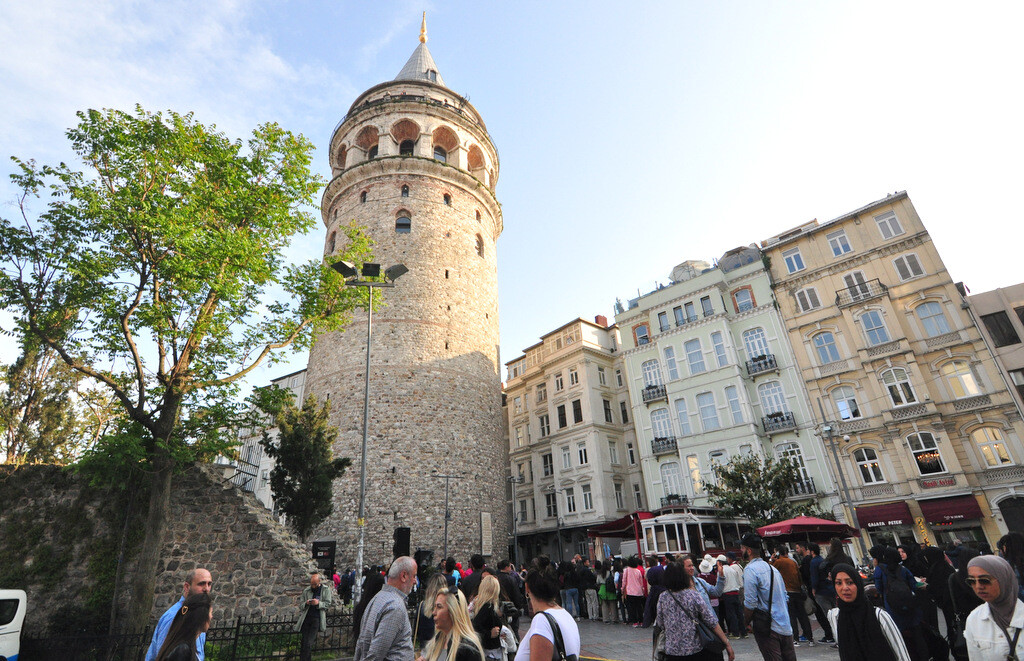
Once Galata was formally placed under Genoese control, the district was quickly transformed into a fortified trading colony. Defensive walls rose around the settlement, warehouses lined the harbor, and a new structure began to dominate the skyline: Galata Tower.
The tower was not built for views or symbolism. Its purpose was clear and practical: to monitor and protect the harbor, control maritime traffic, and secure the commercial lifeline flowing into the Golden Horn.
Under normal circumstances, such a powerful military structure would never have been tolerated so close to the imperial capital. But by this point, the Byzantine Empire was no longer in a position to dictate terms. A weakening empire needed strong allies, and the Genoese provided exactly that — naval power, soldiers, and financial support.
In return for these services, the Genoese were granted extraordinary privileges and a high degree of autonomy. Their loyalty came with fortifications. Alongside Galata Tower, strategic outposts such as Yoros Castle were reinforced to secure key points along the Bosphorus.
Even today, Yoros Castle can still be seen near the Black Sea entrance of the strait, especially during a Bosphorus cruise — a reminder that Galata Tower was part of a much larger defensive network, not an isolated monument.
By the mid-14th century, Galata Tower stood as a statement: commerce was power, and the Genoese intended to protect it.
5. Fall of Constantinople
Although several Ottoman sultans had attempted to capture the city before, it was Mehmed II who ultimately succeeded. In 1453, Constantinople faced its final and most decisive siege.
Interestingly, Galata and its tower were not taken immediately. During the siege, a massive defensive chain was stretched across the mouth of the Golden Horn, delaying direct access to the harbor and slowing Ottoman control over the Galata district.
By the 15th century, Constantinople’s population had fallen dramatically. With limited manpower, the Byzantines had little choice but to defend the city side by side with the Genoese, relying on every available soldier to hold the walls.
Desperate appeals for help were sent to Western Europe, but most went unanswered. The only meaningful military support came from the Genoese Republic, which dispatched around 700 professional soldiers under the command of Giovanni Giustiniani.
Giustiniani proved crucial to the city’s defense. His experience and tactical skill significantly delayed the fall of Constantinople, particularly along the land walls. But when he was severely wounded, he realized the outcome was inevitable and withdrew from the city.
With his departure, organized resistance collapsed. On May 29, 1453, the Ottomans finally entered Constantinople, bringing an empire to an end and inaugurating a new era.
On that same day, Galata Tower — along with the Galata district — was formally handed over to Sultan Mehmed II. Unlike much of the city, Galata transitioned without destruction, allowing its commercial life to continue under Ottoman rule.
This continuity would soon be reinforced through special commercial privileges, shaping Galata’s role for centuries to come.
6. Commercial Privileges to Trading Colonies
After the conquest, Mehmed II chose pragmatism over destruction. Shutting down long-established trade routes would have meant cutting off one of the city’s most valuable sources of income — something the new ruler had no interest in doing.
Instead, the Sultan allowed existing commercial networks to continue operating. Venetian and Genoese merchants retained limited trading privileges, maintaining Galata’s role as a vital link between Constantinople and European markets.
The difference was control. Under Ottoman rule, commerce did not disappear — it was reorganized and heavily taxed, turning Galata’s economic activity into a steady source of imperial revenue.
This practical decision ensured that Galata remained a living commercial district, rather than a conquered ruin — a legacy that still defines the area today.
What to Expect Inside Galata Tower
After its recent restoration, Galata Tower is no longer just a place to enjoy panoramic views. Today, the visit feels more like a short museum walk that gradually leads you upward.
As you move through the lower and middle floors, you’ll encounter compact exhibits, visual installations, and historical displays that introduce the tower’s past — from Genoese Galata to Ottoman Istanbul. The focus is on giving context without overwhelming visitors, making the experience easy to follow even if you’re short on time.
The visit naturally builds toward the highlight: the observation terrace at the top. From here, you can take in sweeping views of the Bosphorus, the Historic Peninsula, and Beyoğlu — a reward that feels earned after the brief journey through the tower’s interior.
In total, the experience balances history, atmosphere, and views, making Galata Tower more than just a photo stop — but also not a time-consuming museum visit.
Galata Tower Entrance Fee (2026)
The Galata Tower entrance fee is 30 Euros in 2026. The ticket includes access to the observation terrace with panoramic views of Istanbul. Museum Pass Istanbul is accepted at the entrance. This information was last updated in May 2026.
Galata Tower Ticket & Tour Options (2026)
Visitors who prefer a smoother experience often choose to arrange their Galata Tower tickets online in advance. Below are two practical options: a skip-the-line ticket with audio guide or a private Bosphorus yacht tour offering beautiful views of the tower from the water.
Both options include mobile confirmation through GetYourGuide.
Galata Tower Opening Hours (2026)
In 2026, Galata Tower is open daily from 08:30 AM to 11:00 PM. There are no closing days, and the tower remains open all year round. This information was last updated in May 2026.
During the summer months, Galata Tower may host different events in the evenings as part of “Night Museology”. For this reason, opening hours may also change; for example, these days the tower is closed between 18:15 and 18:30 for evening preparations.
Visiting hours for museums in Istanbul may change due to events and renovations. Before going to the museum, I suggest you visit the official website of the museum and review the latest situation.
How to Get to the Galata Tower?
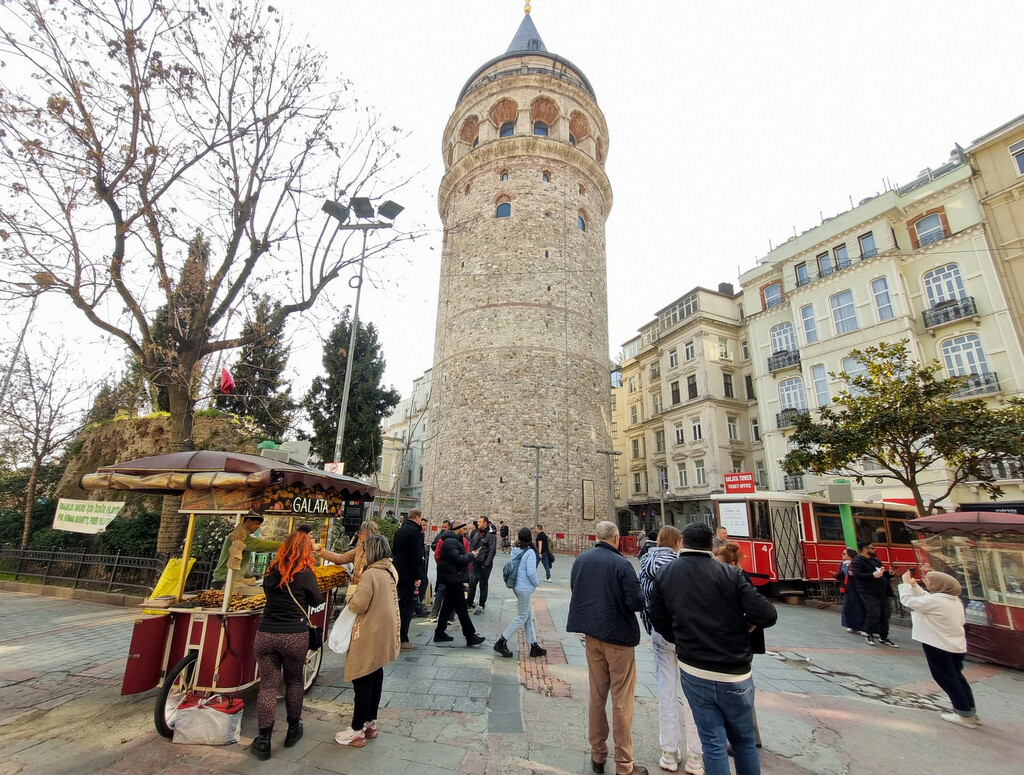
Rising from the heart of Galata, this medieval landmark sits at the center of the lively Beyoğlu district.
Surrounded by narrow cobbled streets, cafés, and historic buildings, reaching the tower is part of the experience — and easier than it looks once you know your options.
From Sultanahmet or the Old City
If you’re starting from Sultanahmet, take Tram T1 toward Kabataş and get off at Karaköy. The ride takes about 20–25 minutes.
From Karaköy, Galata Tower is roughly a 10-minute uphill walk. Follow the signs via Yüksek Kaldırım Street; the climb is scenic but steep, so comfortable shoes are a good idea.
For a quicker and easier option, take the historic Tünel funicular from Karaköy to Beyoğlu. It’s one of the world’s oldest underground railways and leaves you just 5 minutes on foot from the tower.
From Taksim Square
Starting at Taksim Square, simply walk down Istiklal Avenue. When you reach the Tünel area, follow the Galata Tower signs. From there, it’s a short downhill walk through charming side streets.
Arriving by Ferry (Asian Side)
If you’re coming from Kadıköy or Üsküdar, take a ferry to Karaköy or Eminönü. From Karaköy, follow the same uphill route toward Galata; from Eminönü, a short tram ride brings you back to Karaköy before walking up.
Things to Do around Galata Tower

The area surrounding Galata Tower is lively throughout the day. The small square directly beneath the tower is known locally as Kuledibi, and it’s almost always buzzing with cafés, street performers, photographers, and curious travelers.
Rather than listing dozens of options, here are the most rewarding places within easy walking distance, ideal to combine with your visit to the tower.
Galata Mevlevi House Museum
Just a short walk from the tower, the Galata Mevlevi House Museum was once a spiritual center for the whirling dervishes. Today, it functions as a museum and occasionally hosts authentic Whirling Dervish ceremonies, one of the most atmospheric cultural performances you can experience in Istanbul.
If you have the Museum Pass Istanbul, entry is free.
Istiklal Street
From the Mevlevi House, it takes only a few minutes to reach Tünel Square, the historic starting point of Istiklal Street. Stretching roughly 1.5 kilometers to Taksim Square, Istiklal is Istanbul’s most famous pedestrian avenue, lined with restaurants, cafés, bookstores, and historic passages. It’s perfect for a relaxed walk after Galata Tower.
Serdar-i Ekrem Street
For boutique shopping and a more refined atmosphere, head to Serdar-i Ekrem Street. In recent years, this street has become known for design shops, stylish cafés, and small boutique hotels, making it a favorite stop for travelers looking beyond the main tourist routes.
Galataport
If you prefer waterfront views, Galataport is about a 15-minute walk downhill from the tower. This modern cruise port complex offers a wide range of dining and shopping options, along with beautiful views of the Bosphorus — especially pleasant in the late afternoon.
Nardis Jazz Club
To end the day with live music, Nardis Jazz Club is one of the city’s most respected jazz venues. Located just a few minutes from the tower, it regularly hosts both local and international jazz musicians, making it a great evening option if you’re staying nearby.
If you are visiting Galata Tower, these other landmarks are also worth exploring across Istanbul’s historic districts:
- Hagia Sophia – Historic monument shaped by both Byzantine and Ottoman history
- Topkapi Palace – Former imperial residence of the Ottoman sultans
- Dolmabahce Palace – 19th-century Ottoman palace along the Bosphorus
- Blue Mosque – Imperial Ottoman mosque facing Hagia Sophia
- Basilica Cistern – Underground Byzantine water reservoir beneath the Old City
Conclusion
Galata Tower isn’t just a viewpoint — it’s a moment suspended between earth and sky. From its stone crown, you don’t just see Istanbul; you feel it — the domes and minarets, the shimmer of the Golden Horn, the whispers of past centuries caught in the breeze.
After taking in the view, wander down through the cobbled lanes of Galata and Karaköy, where bohemian cafés, street murals, and artisan shops blend old Istanbul with its modern heartbeat.
For a deeper taste of the neighborhood, step into Kamondo Stairs, an architectural curiosity with a story of its own, or follow the road to Tünel, the world’s second-oldest underground railway. From there, the Istiklal Avenue opens before you — a bustling pedestrian street filled with music, history, and surprises around every corner.
Whether you climb the tower at dawn or dusk, Galata offers more than just a view — it offers perspective. A reminder that in Istanbul, every height reached tells a story worth hearing.
I couldn’t find updated opening information on their website, may I ask how you heard of the reopening? Is there any way to purchase tickets online now? Thank you!
The opening or closing of museums in Istanbul due to restoration is notified to guides in the city via email by the Istanbul Guides Chamber. Otherwise, thousands of tours would be disrupted.
I received information from official sources as I mentioned, but any local or foreign tourist can see that the museum is currently open to visitors on a limited basis from this official website.
I don’t understand why you can’t see it, maybe you are looking at the wrong site. Unfortunately, I don’t know how to buy tickets online right now.
Hi Serhat,
I will be in Istanbul at the end of this month.
Will it be possible to visit the Galata Tower Museum?
Thanks
Hello Claudia, I’m afraid Galata Tower will be closed for a while due to roof restoration. It is not yet clear when it will open, but I estimate it will open in the fall.
If I were you, I would research the rooftop cafes around the Galata Tower and go to one of them to take photos. Photographing the tower with the view from a high place is better than climbing the tower itself.
Is the tower renovation complete ? We are visting Istanbul in the first week of May, 2024.
Hello Vaibhav,
Unfortunately, the restoration of the tower is not finished yet. Building reinforcement works are continuing and unfortunately I do not think Galata Tower will be opened in the next few weeks.
Have a nice trip!